In 2026, digital marketing is more than just a collection of tactics—it's a dynamic fusion of AI, automation, data, and creative insight driving brands toward measurable outcomes. For organizations seeking real growth, choosing the right digital marketing agency isn't a mere vendor selection; it’s a strategic decision that defines market trajectory, customer acquisition, and competitive positioning. This comprehensive guide arms brand leaders and marketing strategists with actionable steps to vet agencies by their mastery of emerging technologies, automation readiness, and data-driven decision-making. Anchored with the latest evaluation criteria, case studies, and decision frameworks, you'll learn how to select a partner prepared for the unique challenges and opportunities of the 2026 landscape.
Articles
2026 Digital Marketing Agency Selection Guide: Evaluating Expertise for Brand Growth in a Tech-Driven Landscape
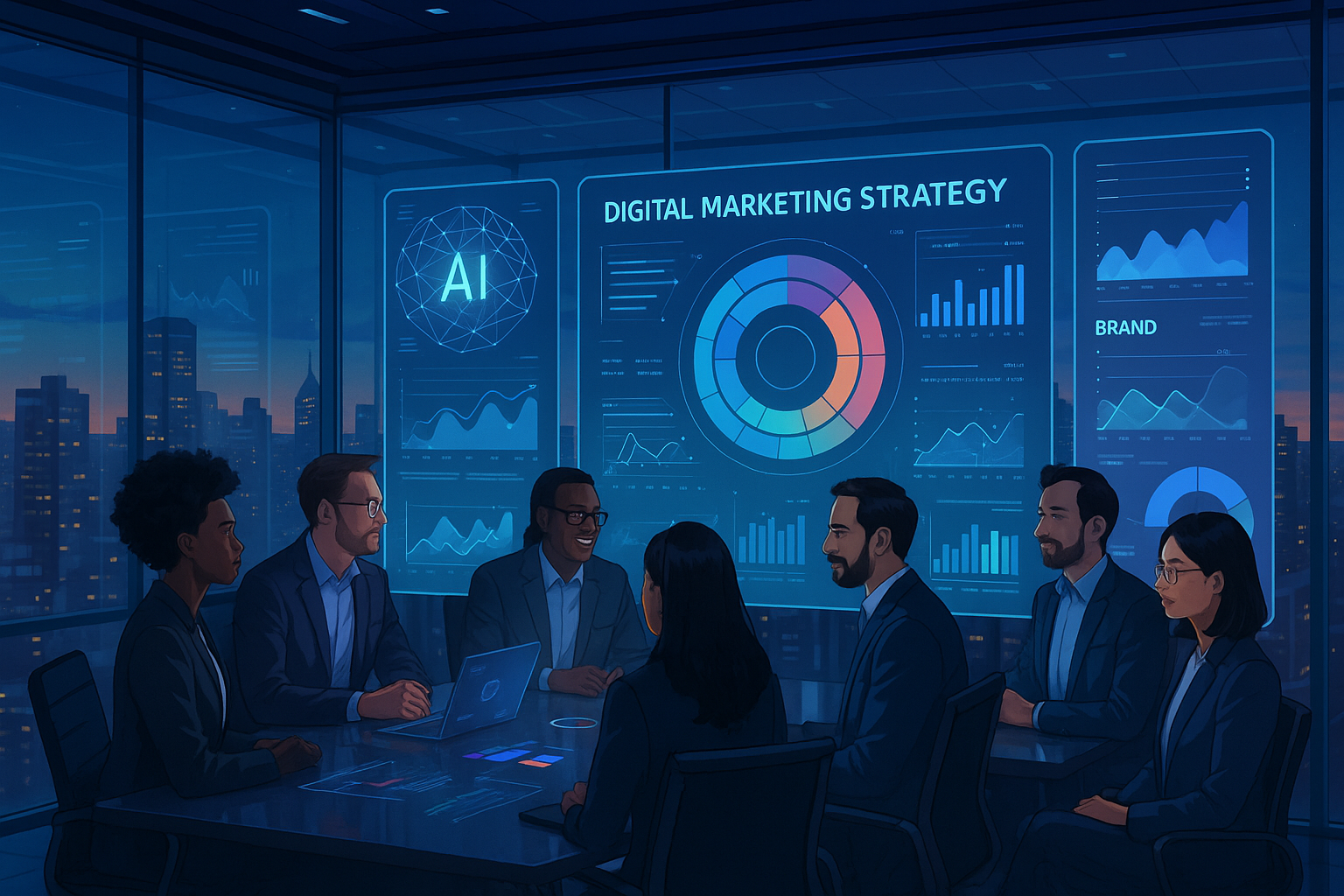
Selecting the right digital marketing agency in 2026 means looking beyond buzzwords. This guide walks growth-focused leaders through practical strategies and technological benchmarks—ensuring your brand partners with an agency that antic...
Build direction
Key Takeaways: Choosing a Future-Proof Digital Marketing Agency in 2026
Prioritize agencies with proven expertise in AI-driven marketing automation and analytics.
Evaluate demonstrated lead generation performance and case studies related to your industry vertical.
Demand transparency: Insist on regular reporting, KPI alignment, and projected ROI benchmarking.
Assess the agency’s integration capabilities with your existing tech stack, CRM, and content platforms.
Ensure cultural and strategic fit—your agency must act as an extension of your core growth team.
1. The 2026 Digital Marketing Landscape: Core Shifts and Emerging Technologies
The digital marketing terrain in 2026 is characterized by rapid technological evolution, shifting privacy frameworks, and an exponential increase in data-driven personalization. Brands are facing a marketplace where generative AI, predictive analytics, and omnichannel automation are non-negotiable. Agencies must not only understand these technologies but also translate them into business value—delivering campaigns that resonate at scale while achieving measurable lead and revenue objectives.
Recent developments in programmatic media buying and AI-powered creative optimization mean that legacy processes are obsolete. Agencies offering manual campaign management or cookie-cutter approaches quickly fall behind. Instead, marketing decision-makers should focus on partners that leverage advanced AI solutions like those found in our AI Digital Marketing service and invest in platforms supporting dynamic audience segmentation, real-time data visualization, and responsive cross-channel orchestration.
Furthermore, regulations such as global data privacy standards demand agencies operate with ethical rigor and compliance-first thinking. The right agency will help you navigate this complex territory—protecting brand equity and minimizing risk, as highlighted in our insights on AI-generated unauthorized biographies.
2. Defining Evaluation Criteria: What Really Matters in Agency Selection
Most requests for proposals (RFPs) in 2026 still start with service checklists, but the most effective brands dig deeper. An agency’s core value lies in its ability to move needles that align with your growth model—qualified lead generation, increased CLV (Customer Lifetime Value), and efficient spend. This begins with reviewing the agency’s track record across industries and translating that into tangible projections for your business.
Special attention must be placed on the agency’s use of automation. Can they enhance your sales funnel with AI-driven nurturing and lead scoring, and can these tactics integrate with your existing product stack? Review their experience in CRM marketing, and request walk-throughs of their campaign automation practices. Our CRM lead assignment best practices topic offers further insight on robust lead management.
Finally, ensure they offer robust transparency. Top-tier agencies deliver routine KPI reports, competitive benchmarking, and dashboards mapping efforts to your stated objectives. For guidance on crafting the right mix of measurement metrics, visit our resource on choosing social media KPIs aligned to business outcomes.
3. Vetting Technical and Strategic Expertise: From Automation to Omnichannel
In a marketplace saturated with marketing providers, true agency value is revealed by technical acumen and strategic insight. Look for teams that are not only Google and Meta certified but can demonstrate deployment of advanced martech—such as predictive analytics tools, customer data platforms (CDPs), and AI-driven content personalization engines.
Evaluate how well agencies align technology to your ecosystem. For example, can they deeply integrate with your web stack? See our Web Development service for clues on the interoperability standards to request. In mobile-first or app-centric sectors, agencies must understand user acquisition and engagement lifecycles—a topic explored in detail in our discussion on marketing new apps.
Ask for technical audits: Can the agency assess and recommend improvements to your current website, landing pages, and conversion funnels? Agencies supported by strong AI Brand Marketing capabilities frequently outperform those relying solely on traditional strategy.
4. Assessing Lead Generation, Attribution, and Performance Measurement
No agency partnership should proceed without granular discussion of lead generation and performance accountability. In 2026, advanced agencies deploy cross-channel attribution, real-time analytics dashboards, and predictive lead-scoring engines. You should demand clear evidence of funnel optimization expertise and a documented ability to reduce CAC (Customer Acquisition Cost) while improving lead quality.
Review prior campaign case studies—insist on seeing measurable boosts in MQLs (Marketing Qualified Leads), SQLs (Sales Qualified Leads), and closed-won opportunities. Benchmark these against your industry’s digital expectations. Our digital marketing agency selection FAQ outlines further questions to inform your review process.
It is equally critical that your agency is fluent in your tech infrastructure. Whether you use Salesforce, HubSpot, Marketo, or a custom stack, seamless data flow, reliable attribution, and actionable insights must be non-negotiable. Explore our CRM configuration topics for more practical integration advice.
5. Cultural and Strategic Alignment: The Human Side of Agency Selection
In the rush towards technical excellence, cultural fit is often underestimated. However, the most successful agency relationships are built on shared values, transparency, and collaborative energy. Your agency should feel like an extension of your in-house marketing team—embedded in your objectives, values, and organizational tempo.
Seek partners who invest the time to understand your business model, competitive landscape, and growth aspirations. Their onboarding process should include deep-dive workshops, stakeholder Q&As, and scenario planning. A firm that questions your priorities or challenges assumptions constructively signals maturity and thought leadership.
Consider their communication protocols and escalation pathways. Will they offer direct, senior-level contacts? Are their project managers empowered to pivot quickly in response to emerging trends or data insights? If you demand agility from your marketing efforts, your chosen agency must demonstrate the same capacity to iterate and innovate.
6. Building Selection Frameworks: Checklists, Pitches, and Onboarding Success
Armed with the right evaluation criteria and insight, you must build a clear, actionable framework for agency selection. Start with a weighted checklist covering expertise in automation, analytics, and industry-specific tactics. Assign value to case studies, proprietary technology, and customer success processes.
During RFPs and pitch meetings, benchmark agency competencies head-to-head using a transparent scoring guide. Invite questions related to integration, reporting cadence, projected ROI, and previous vertical experience. Direct prospects to your ideal outcomes—beware of agencies whose proposals feel generic or templated.
Finally, plan comprehensive onboarding if you choose a partner. Develop a roadmap that includes platform handover, asset migration, cross-team workshops, and regular business reviews. Agencies willing to commit to robust onboarding are more likely to accelerate your path to marketing ROI. For specialist onboarding challenges—such as integrating digital efforts with mobile app strategies—review our advice on branding design best practices for apps.
Decision table
Comparing 2026 Agency Capabilities: A Strategic Checklist
| Automation & AI | Reporting & Attribution | Integration | Cultural Fit |
|---|---|---|---|
| Advanced AI-driven personalization, campaign automation, predictive insights. | Real-time dashboards, cross-channel attribution, transparent KPI mapping. | Proven API, CRM, and content stack integration—supports web/app sync. | Deep onboarding; stakeholder workshops; acts as team extension. |
| Limited automation—manual campaign tweaks dominate. | Monthly static reports with minimal attribution detail. | Basic API usage—single-channel; limited tech-stack depth. | Reactive only; infrequent stakeholder engagement. |
| Custom AI models and deep learning for segment prediction. | Live granular analytics; supports A/B/n testing feedback loops. | Flexible integrations: ERP, mobile, web, and platform-agnostic tools. | Proactive issue resolution and strategic input. |
| Off-the-shelf martech stack—few platform updates. | Standardized templates; minimal custom metrics. | Legacy CRM integration with data lag; weak onboarding. | Little CMO/CXO-level access; account manager rotation. |
| Full automation, NLP-driven chatbots; dynamic creative optimization. | Predictive lead scoring; automated anomaly alerts. | Omnichannel orchestration: web, app, email, SMS, PPC. | Quarterly strategic reviews and joint growth planning. |
Article FAQ
Questions related to this article.
How do I shortlist agencies with the right automation and AI capabilities for 2026?
Start by requesting case studies or live demonstrations of the agency’s AI and automation in action—ask specifically about outcome improvements attributed to these technologies. Prioritize agencies presenting proprietary or platform-level automation features, and cross-reference with the AI competencies described in our AI Digital Marketing service. In interviews, probe for examples of automated personalization, predictive analytics, and real-time reporting solutions.
What should I ask during the agency pitch to assess cultural alignment?
In the pitch, ask how the agency approaches onboarding, knowledge transfer, and regular communication. Request clarity on escalation pathways, senior management involvement, and examples where they adapted strategies based on client feedback. Evaluate whether the agency’s team demonstrates curiosity about your brand beyond the brief—they should challenge your strategy constructively and offer to partner in scenario-based planning.
How are the most effective KPIs for digital campaigns determined in 2026?
Effective KPIs must be tailored to your growth strategy and sales funnel. Today’s top agencies deploy predictive tools to recommend leading indicators—ask for their rationale in KPI mapping and review their approach to custom dashboard development. For an in-depth guide to social metrics, see our resource on choosing the right social media KPIs.
Why is integration capability so essential, and how do I test it?
Integration ensures your marketing operations are seamless, data flows accurately, and insights are actionable in real time. Ask for technical audits, details of previous integration projects, and references from brands with similar stacks (CRM, CMS, app, analytics). Review documentation and request a live integration plan for one of your use cases. Our Web Development service and help on multi-channel strategy offer further guidance.
What are common pitfalls when selecting a digital marketing agency for tech-driven growth?
The most common pitfalls are overvaluing creative flair over technical prowess, ignoring integration complexity, neglecting transparency in reporting, and underestimating the importance of cultural fit. Avoid agencies that promise results without proven frameworks or those who lack the flexibility to evolve with market shifts. For a comprehensive overview of evaluation missteps, see the digital marketing agency selection FAQ.