Mobile app development has evolved from a technical luxury into a critical asset for digital brands that prioritize high-velocity lead generation. In an era where users expect personalisation, speed, and convenience at their fingertips, companies that leverage custom mobile apps are capturing, nurturing, and converting leads at an unprecedented rate. This article unpacks how strategic app development can unlock new channels of engagement, boost lead quality, and supercharge your marketing ROI. We’ll detail actionable strategies, best practices from successful digital campaigns, and concrete build considerations that every digital marketing manager should know.
Articles
How Mobile App Development Accelerates Lead Generation for Digital Brands
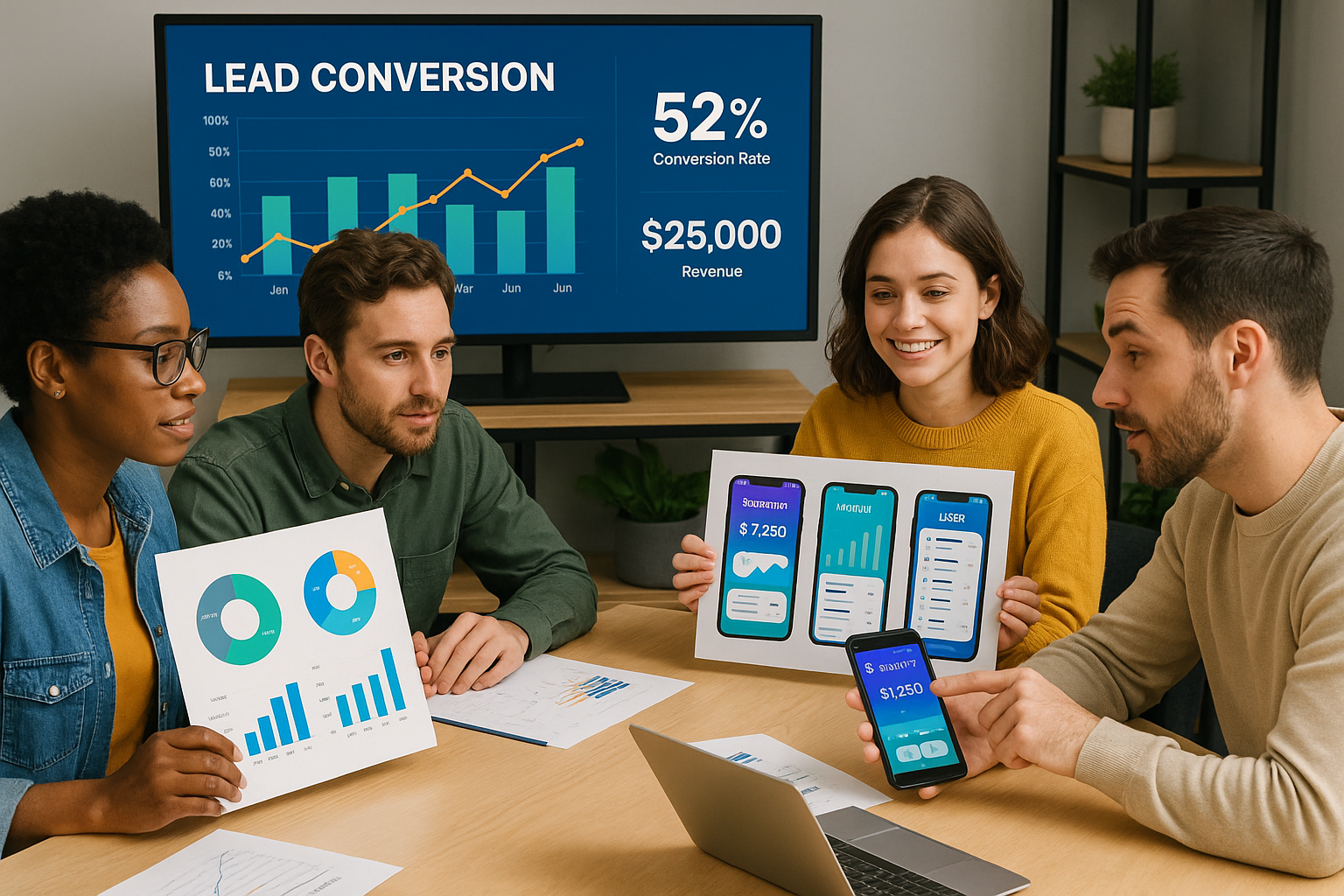
Discover how custom mobile apps can skyrocket your digital brand’s lead generation. In this in-depth guide, we break down actionable strategies, mobile app features, campaign examples, and proven methods that marketers and digital leader...
Build direction
Key Insights on Mobile App-Driven Lead Generation
Custom mobile apps create more direct, data-rich lead funnels than websites or third-party platforms.
App-specific push notifications and personalized experiences dramatically lift user engagement and lead capture rates.
Integrated lead forms, chat, and AI-driven segmentation within apps enable better lead nurturing and higher conversion.
Successful campaigns combine mobile apps with omnichannel marketing for seamless follow-up and CRM integration.
Strategic mobile app development—from modular UI to compliance and analytics—lays the groundwork for scalable lead gen innovation.
The Unique Advantage of Mobile Apps in Lead Generation
Mobile apps grant digital brands a persistent presence on users’ devices—far beyond the reach of email campaigns or basic mobile-optimized sites. By sitting on the home screen, apps offer instant access pathways that naturally boost repeat engagement and reduce lead churn. Unlike web traffic, which tends to be fragmented, an app platform captures user behavior more intimately, providing richer data for lead scoring and segmentation.
Moreover, in-app lead flows can be thoroughly customized for your brand’s niche. Features like account creation, pre-filled forms, social sign-ins, and one-tap callbacks streamline the capture process, meeting prospects at their preferred point of contact. For marketing managers, these touchpoints offer golden opportunities to experiment with targeted offers and gated content. And with lower friction than browser-based pop-ups, apps can multiply your lead form submissions.
A well-architected app also becomes a privileged channel for permission-based outreach. Push notifications, in-app messages, and adaptive onboarding journeys keep your brand top-of-mind and prime users for timely offers. When paired with robust analytics, this closed ecosystem can turn casual browsers into qualified leads and loyal customers far more efficiently than traditional web-first approaches.
Building for Performance: Key Mobile App Features That Drive Leads
Elite lead generation apps share a common DNA: modular features, intuitive UX, instant load times, and real-time integrations. Essential modules include frictionless lead capture forms, embedded chat (often powered by AI or human agents), referral and rewards program hooks, and hyper-personalized promotional banners. Each element should be designed with conversion in mind, minimizing field inputs and leveraging device-native capabilities such as autofill, geolocation, and push.
A critical design choice is personalization. Dynamic content, context-aware offers, and behavior-driven segmentation set apart top-performing apps. For example, geo-fenced push offers or AI-driven product recommendations increase the odds of proposition relevance—and thus, lead volume. Integrations with your existing CRM and marketing automation platforms are equally crucial, allowing for real-time lead sync, nurture, and scoring.
Operationally, building modular, updatable app sections reduces deployment risks and empowers agile marketing. To explore best practices in feature modularization and post-launch flexibility, see our guide on building modular mobile app features.
Actionable Strategies: Turning App Users into Qualified Leads
Translating high mobile app engagement into lead flow requires intentional and continuous strategy. Lead-gen-centric onboarding—such as progressive profile completion or value-based unlocks (discount on form submission, exclusive content after sign-up)—can instantly boost early conversions. Subsequent journeys should leverage milestone triggers: when a user completes an action (viewing a product, sharing with a friend, or using a feature), surface personalized calls-to-action for demo requests, call scheduling, or gated resources.
Another proven approach is contextual lead capture. For example, if a user abandons a cart or lingers on high-value content, deploy a contextual form or a chatbot inside the app to invite them to connect with sales. Experimenting with interactive content—polls, quizzes, calculators—turns passive app sessions into active lead-capture opportunities, feeding high-intent leads directly into your CRM.
Many digital brands are now integrating AI-driven agents to handle pre-qualification within the app itself, segmenting leads based on their responses and surfacing the next best action (call, email, or demo scheduling). To ensure seamless transition of app data into web and ad campaigns, robust backend syncing and analytics are vital—a topic detailed further in our AI Digital Marketing service.
Mobile App Campaign Examples: Real Results from Digital Brands
To illustrate impact, consider a fitness SaaS brand that launched a mobile app offering exclusive video content and in-app live Q&As. By incentivizing registration through unlockable workout plans and push notifications tailored to app usage patterns, they quadrupled their monthly lead capture—while syncing app profiles directly with their CRM for cross-channel email and ad retargeting. A fintech company, meanwhile, introduced an 'instant callback' feature within their onboarding, capturing leads the moment interest peaked and leading to a 40% increase in qualified consult requests.
Retail brands are leaning on 'scan & win' programs, where users scan in-store QR codes via the app for exclusive sweepstakes entry—instantly capturing new leads and tying them to omnichannel IDs for ongoing nurture. Push notification sequencing (reminders for abandoned carts or special offers based on browsing) is helping e-commerce apps recover and convert up to 30% of previously lost leads. For further strategic angles that blend apps and paid traffic, see our help guide on Google Ads lead generation targeting.
On the B2B front, SaaS and business service brands are leveraging education-focused apps—offering gated industry reports and skill assessments exclusively within the app, driving not just list growth but higher-quality, high-intent leads. Each example underscores the point: custom mobile apps, when aligned with campaign strategy and analytics, become a multiplier for both scale and quality in lead pipelines.
Key Build and Operational Considerations for Marketers
A successful mobile app for lead generation balances inventive marketing with rock-solid execution. Early planning should include mapping pivotal user journeys (from app discovery through repeat engagement and lead hand-off). For best practices around critical lead CRM flows pre-launch, reference our in-depth insight on lead CRM user flows. Privacy compliance must be core from the outset, especially as mobile apps can collect highly granular behavioral and location data.
Accessibility is often overlooked in the rush to market—yet inclusion directly affects lead reach. Build for all users by following accessibility guidelines; resource details are in our primer on creating accessibility-friendly mobile apps. For marketers and product teams, continuous release cycles with analytics-driven iteration are essential: analyze where users drop off, what incentives generate action, and optimize in-app CTAs and lead forms accordingly.
Operationally, ensure that leads from your app are unified with those from your website and ad campaigns, minimizing duplicate entries and maximizing follow-up efficiency. Plan for integration with your CRM, marketing automation, and support platforms, and consider how app features can foster ongoing engagement (loyalty programs, content updates, exclusive in-app offers) to drive repeated lead opportunities.
Measuring Success: Analytics, Attribution, and Continuous Optimization
Mobile app lead generation is only as good as its measurement discipline. Brands must deploy robust analytics to track key conversion events—from initial app install through form submission, chat interaction, and in-app purchase or consult sign-up. Modern SDKs allow event-based tracking that can feed directly into your analytics dashboards and CRM. Establish clear KPIs: lead conversion rates by source, cost-per-lead by channel, and lead quality (as measured by sales progression).
Attribution remains a challenge, especially as leads interact across app, web, and other channels. Use UTM parameters, device identifiers, and deep linking to attribute lead sources accurately. Real-time pipelines help tie app activity directly to outcomes—informing ad spending, creative testing, and campaign sequencing. For more on analytics best practices, and how to bridge in-app and ad platform data, see our Web Development service or explore recent digital marketing insights in our Insights hub.
Finally, treat your mobile app as a testbed for ongoing optimization. Regularly analyze funnel leakage, form performance, push notification effectiveness, and segment-based conversion. Deploy A/B tests on in-app messaging, landing sequences, and lead magnets—scaling up what works. With this performance-first mindset, your investment in app development becomes a sustainable competitive advantage for digital lead generation.
Decision table
Mobile App Lead Gen Planning: Feature Comparison Table
| Feature | Impact on Leads | Implementation Complexity | Best Use Case |
|---|---|---|---|
| In-app Lead Forms | High—direct capture | Low | E-commerce, Service Booking |
| Push Notifications | Moderate to High—re-engagement | Medium | Cart Recovery, Flash Offers |
| Integrated Chatbot | High—pre-qualification | Medium | B2B SaaS, Consult Scheduling |
| Referral Program | Moderate—viral lift | Medium | Consumer Apps, Loyalty |
| Personalized Content | High—higher intent | High | Education, B2B Content Marketing |
Article FAQ
Questions related to this article.
How does a mobile app lead generation funnel differ from a website funnel?
A mobile app funnel leverages device-native features (like push notifications, camera, and biometrics) for faster, more personal engagement compared to a website. Users are often logged in, enabling streamlined lead capture through pre-filled forms and deep profile data. Apps also keep leads engaged longer via ongoing notifications, personalized experiences, and direct updates, while web funnels usually rely on sporadic visits and email follow-ups. This results in higher-quality, continually nurtured leads when executed strategically.
What tools should digital brands use to measure mobile app lead conversions?
Brands should implement mobile analytics SDKs (like Firebase, Adjust, or Mixpanel) for in-depth event tracking. Integration with a CRM is essential for tracking downstream lead quality and sales outcomes. Cohort analysis tools, attribution solutions, and in-app A/B testing suites all help correlate user actions with conversion outcomes. For connecting app data with ad campaigns and optimizing spend, consider reading more in our conversion tracking with Google Ads guide.
How long does it typically take to develop a custom mobile app for lead generation?
Development times vary by app complexity and feature set, but a focused, lead-gen-driven mobile app typically takes between 3 and 6 months from requirements to app store launch. Influencing factors include custom UI, number of third-party integrations, compliance work, and how many iterative releases are planned post-MVP. For detailed estimates, see our product overview on typical custom mobile app timelines.
Should marketing teams use in-house or agency partners for app development?
The choice depends on speed, expertise, and maintenance goals. In-house teams offer deep brand knowledge and faster iteration, but require recruiting top talent and investing in ongoing training. Agencies (like those specializing in app development) bring broad technical knowledge, fresh UX ideas, and scalability—making them ideal for brands with limited internal resources or aggressive go-to-market timelines. The best results often come from hybrid models, where in-house product and marketing teams drive vision, and agencies execute builds.
What compliance and security measures are essential for lead-generating apps?
Apps must comply with GDPR, CCPA, and other data privacy laws regarding lead data and behavioral tracking. Secure, encrypted storage of personal and contact data, opt-in consent for outreach and push notifications, and transparent privacy policies are non-negotiable. Regular vulnerability assessments, two-factor authentication, and APIs that limit data exposure are critical as well. For brands expanding internationally, ensure your compliance strategy adapts to region-specific regulations for user consent and data portability.