Artificial intelligence is radically shaping the landscape of B2B lead generation. For modern growth and automation managers, achieving a competitive edge means more than acquiring leads—it’s about orchestrating seamless, data-driven experiences across your website, CRM, and marketing stack. By integrating AI-powered lead capture with your existing systems, you not only increase the quantity and quality of your leads but also drive process automation, personalization, and sales velocity. In this step-by-step guide, we’ll walk through proven strategies to connect AI lead gen tools with web forms, customer relationship management (CRM) platforms, and marketing automation workflows for transformative business impact.
Articles
Integrating AI-Driven Lead Capture with Your Web and Automation Stack: A Step-by-Step Guide for B2B Brands
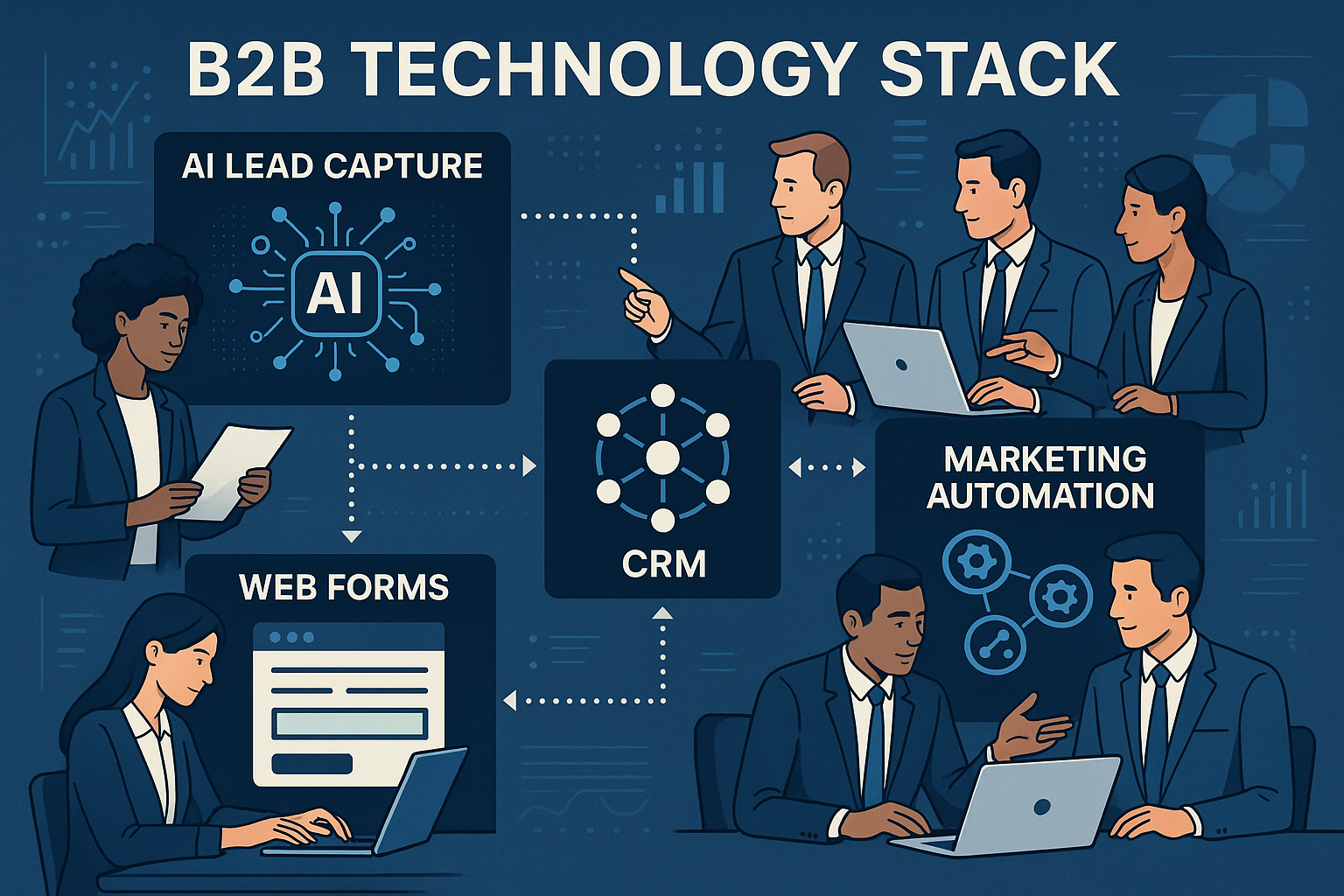
Unlock the power of AI for B2B lead generation. This comprehensive guide shows growth and automation managers exactly how to integrate AI-driven lead capture with web forms, CRM systems, and marketing automation platforms—for higher effi...
Build direction
Key Steps for Effective B2B AI Lead Generation Integration
Audit your current web forms, CRM, and automation platforms to map integration opportunities for AI-driven lead capture.
Choose AI tools that can score, route, and enrich leads in real-time, ensuring compatibility with your website and back-end systems.
Implement seamless data flow to synchronize lead activity between web, CRM, and marketing automation tools.
Leverage AI-driven insights for personalized lead nurturing, campaign optimization, and sales alignment.
Continuously monitor, test, and optimize the lead generation process, using performance data to refine integrations and achieve growth targets.
1. Why AI Matters for B2B Lead Generation—and the Risks of Siloed Systems
In today’s fast-paced B2B markets, simply acquiring leads is no longer sufficient—quality and velocity are pivotal. AI-driven lead capture introduces layers of intelligence to traditional forms and touchpoints, from automated qualification to real-time enrichment and advanced routing. The outcome? Faster, more accurate lead scoring and shorter sales cycles.
Yet, many organizations still operate with disconnected systems. Legacy web forms might pass leads to static CRM lists, and marketing automation platforms often rely on batch updates. This leads to missed opportunities and wasted spend: duplicate data, poor sales-marketing alignment, and weak personalization hurt both ROI and customer experience. Integrating AI creates a single, dynamic ecosystem where every touchpoint and system can contribute to a richer, smarter pipeline.
Seamless AI integration enables brands to leverage predictive analytics, tailor engagement based on real behaviors, and automate tedious workflows. Introducing these capabilities into your stack means driving more qualified opportunities, reducing operational drag, and unlocking new avenues for creative digital marketing, sales, and customer success teams.
2. Assessing Your Current Web Lead Capture and Automation Stack
The first step to successful integration is an honest audit of your existing tools. Identify all the web forms that collect leads across your site—contact pages, gated assets, event registrations, and product demos. Document the platforms that process these leads: which CRM do you use? What marketing automation tools are in place? How are these connected, and what data currently flows between them?
Explore your existing ecosystem for bottlenecks and gaps. Does your CRM automatically ingest web form submissions, or is manual entry required? Are marketing campaigns able to trigger based on new lead attributes, or does static data limit personalization? These are the essential questions to answer before introducing AI. For a practical guide to web optimization, check out our Web Development service expertise or delve into how real estate sites can maximize lead capture for campaigns in our insights for property portals.
Auditing isn’t just technical—it involves talking to sales, marketing, and IT stakeholders. Understanding organizational workflows and existing pain points ensures your AI integration will solve the right business problems and lay the groundwork for true enablement, not just feature overload.
3. Choosing and Connecting AI-Driven Lead Capture Tools
Selecting the right AI-driven lead capture tools hinges on your goals, industry, and technical landscape. Look for platforms that deliver real-time lead scoring, enrichment (such as adding social, firmographic, or behavioral data), and intelligent routing—capabilities that prevent good leads from falling through the cracks.
Compatibility is critical: evaluate whether your AI tools offer APIs or out-of-the-box integrations with leading CRMs and marketing automation platforms. For B2B organizations handling high-touch sales, tools must sync consistently with platforms like Salesforce, HubSpot, or Marketo. Explore the advantages of CRM-integrated PPC for tight campaigns in our PPC integration roadmap.
Once selected, map out the data flows: which fields should the AI capture, enrich, and push downstream? Do you want to trigger automated campaigns, assign scores, or notify reps in real time? Working closely with your IT team (and partner agencies) ensures secure authentication, data privacy, and durable connections between all platforms involved.
4. Implementing Seamless Data Flows: Syncing Web, CRM, and Automation
Getting the technology to talk is only half the battle: your lead data must flow seamlessly, securely, and in real time across systems. Typically, this means configuring web forms or chatbots backed by AI to connect to your CRM via native integrations, middleware, or custom APIs. Each new lead is instantly scored, classified, and enriched before being made available to sales or marketing channels.
Trigger-based automation can then kick in—from delivering tailored email sequences to granting access to gated assets or routing hot leads for immediate follow-up. Ensure field mappings are clear and that business rules (such as lead ownership and deduplication) are encoded programmatically. Our AI Digital Marketing solution is built for these kinds of complex, secure integrations, helping brands automate without losing data fidelity.
Frequent testing—across edge cases and high-volume scenarios—is essential. Observing how leads are processed from point of capture to closed deal identifies places where manual handoffs, lags, or data errors persist. Use these findings to iterate, and don’t be afraid to reinvent stale legacy processes in the light of AI-driven automation.
5. Leveraging AI to Drive Personalization, Nurturing, and Sales Alignment
AI’s real power emerges after initial capture. Internal data—augmented with AI insights—lets you tailor nurturing sequences, personalize content, and align handoffs to sales based on meaningful intent signals. Automated segmentation and behavioral scoring tell you not just who filled out your form, but who’s ready to buy, who needs to be nurtured, and what stories or offers will resonate most.
Marketing automation platforms can trigger decision-tree campaigns on the fly, adjusting content delivery in response to AI-detected buying signals or objections. This enables marketers to move beyond static drips and truly dynamic journeys—and gives sales teams the context they need for timely, highly relevant outreach.
Want to see how this precision works in practice? Learn about connected lead nurturing for high-ticket B2B offerings in our LinkedIn Ads pipeline guide or tap into marketing automation best practices for ecommerce at our automation roundup for digital shops.
6. Monitoring, Optimization, and Future-Proofing Your AI Lead Gen System
Deployment isn’t the finish line—ongoing monitoring, reporting, and optimization are essential for AI-driven lead systems. Instrument your stack with analytics to track each step: lead capture rates, funnel drop-offs, scoring accuracy, conversion velocity, and ultimately revenue impact.
Regularly review both macro and micro metrics: system health, error logs, and engagement patterns. Perform A/B tests on form fields, AI scoring algorithms, and nurture sequences to identify what drives the best outcomes. Equally crucial is keeping abreast of evolving AI technologies—consider how generative AI or new data enrichment vendors might further streamline or personalize future campaigns. For cutting-edge insights, visit our News & Insights hub or dive into the future of agentic AI in mobile in our deep dive on StepFun's StepX Neo.
Training sales and marketing teams on how to use, interpret, and trust AI-driven insights is pivotal. Regular workshops and detailed documentation help combat skepticism and ensure everyone is aligned around unified pipeline goals—transforming your organization into a truly data-powered enterprise.
Decision table
Planning Guide: AI Lead Generation Integration Checklist
| Step | Key Actions | Pitfalls to Avoid | Resources |
|---|---|---|---|
| Stakeholder Alignment | Audit current stack & workflows | Ignoring informal lead flows; poor communication | Web Dev Service |
| Tool Selection | Shortlist AI tools for scoring, enrichment, routing | Choosing tools with limited integrations | AI Marketing? |
| Connection Planning | Map data flows, field mapping, API setup | Lax security or unclear business rules | Product Hub |
| Testing & Launch | Pilot integrations, QA, end-user training | Skipping edge-case or volume tests | Help Hub |
| Optimization | Monitor, report, iterate; onboard new features | Failing to A/B test or retrain models | News & Insights |
Article FAQ
Questions related to this article.
How does AI improve B2B lead qualification compared to traditional methods?
AI can analyze a wider array of engagement signals in real time—including web/page behavior, social data, and external firmographics—delivering more accurate, consistent, and objective lead scores. Unlike manual or rules-based approaches, AI continually refines its models, enabling your team to focus on high-potential prospects while reducing human error and bias.
What’s required for seamless integration between AI lead capture, web forms, and CRMs?
Effective integration typically requires robust APIs or middleware between your AI tool, web forms, CRM, and marketing automation platform. Close coordination between IT, marketing, and sales ops is vital to map fields, handle data privacy, and establish rules for lead ownership and routing. Investing in a unified integration strategy removes bottlenecks and ensures leads are actionable the moment they enter your ecosystem. For expert support, explore our Web Development service.
How can automated lead nurturing be personalized with AI?
AI enables real-time behavioral analysis, segmentation, and intent detection for each lead. Marketing automation tools can trigger specific content, offers, or sales outreach based on these insights—moving beyond fixed drip sequences to truly individualized nurture journeys that respond to evolving buyer interests and readiness.
Is it possible to connect AI lead generation with phone or offline leads?
Yes. Solutions such as AI-enabled call tracking or form-to-call routing can capture, classify, and score phone leads, integrating this rich data directly with your CRM and automation stack. For non-form lead capture strategies, see our deep dive on offline lead capture.
How do we future-proof our AI lead generation investment?
Future-proofing requires continual monitoring, regular retraining of AI models, adopting flexible integration methods (such as modular APIs), and staying informed about emerging AI advancements. Foster a culture of ongoing education and readiness to experiment—utilize resources like our News & Insights hub for the latest trends impacting B2B digital growth.