The rapid evolution of marketing technologies has elevated both the demand for qualified leads and the complexity of digital infrastructure required to capture them. For automation-focused marketing and IT professionals, the imperative is clear: integrate AI-driven lead generation into your web and app automation stack, or risk falling behind. Modern AI engines identify, qualify, and engage prospects more effectively than traditional methods—provided they are deployed within cohesive, automated environments. This article explores detailed strategies for embedding AI lead capture across web, app, and cross-platform automation flows, empowering your team to increase lead quality, shorten sales cycles, and make smarter marketing investments.
Articles
Maximizing ROI: Integrating AI Lead Generation Into Your Web and App Automation Stack
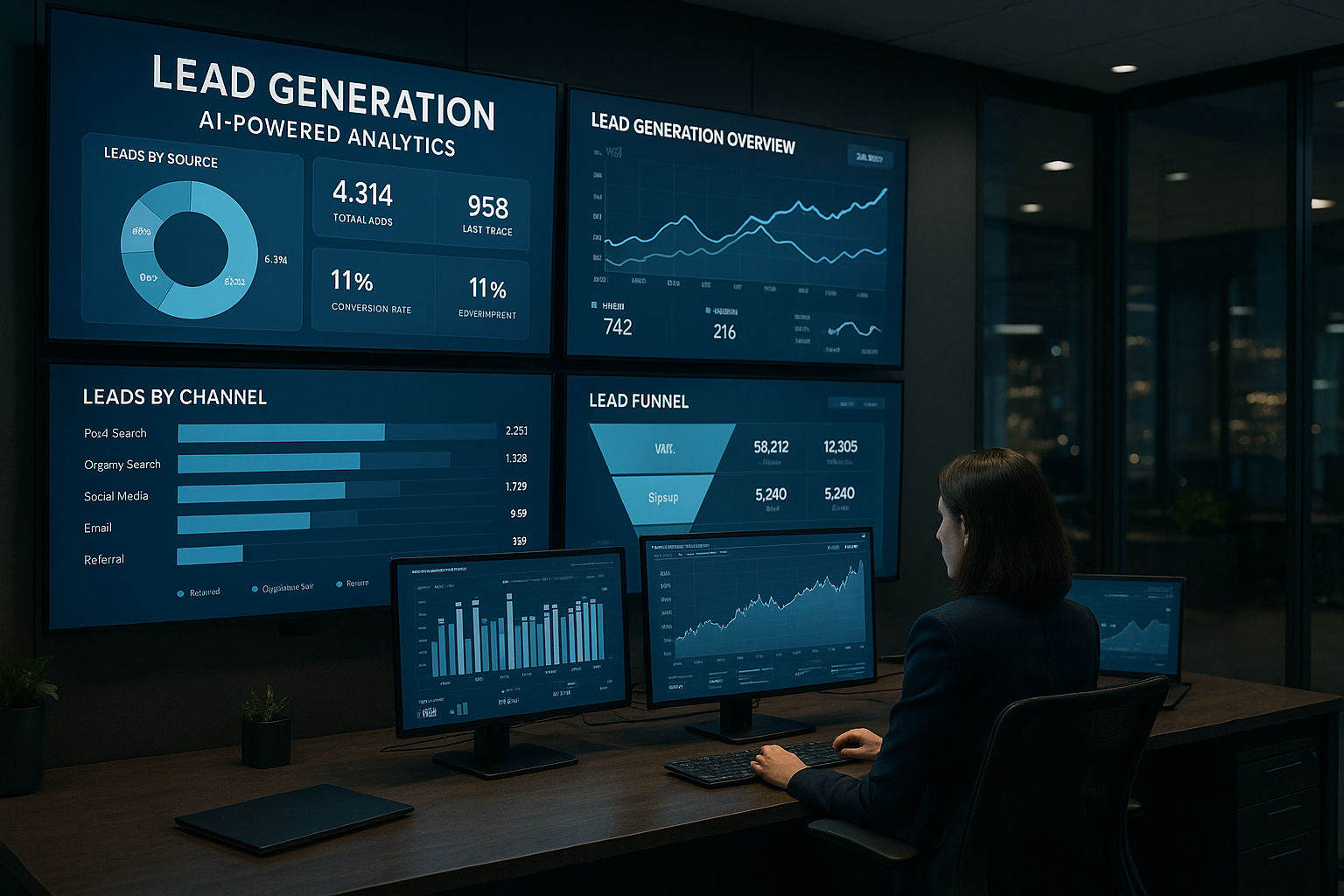
Discover how embedding AI-powered lead capture within your web and app automation stack can supercharge conversions, streamline the sales funnel, and future-proof your digital marketing strategy. This in-depth guide examines actionable f...
Build direction
Key Takeaways for Embedding AI Lead Generation
AI lead generation increases conversion rates by precisely targeting and qualifying potential customers based on real-time behavioral data.
Embedding AI lead capture in web and app automation requires robust data integration, process mapping, and well-defined triggers for engagement.
Marketing and IT professionals should prioritize AI models that align with brand goals, audience intent, and omnichannel marketing strategies.
Automation stacks must balance flexibility and compliance, ensuring secure data handling while enabling rapid lead flow between systems.
Evaluating proven AI tools, integrating with existing workflows, and iteratively optimizing capture points are essential for maximizing ROI.
The Strategic Value of AI Lead Generation in Automated Stacks
AI-driven lead generation goes beyond simple data capture and email signups; it harnesses machine learning to identify high-intent prospects, segment audiences dynamically, and personalize outreach at unprecedented scale and speed. Automation platforms, from enterprise CRMs to custom-built app flows, now rely on AI tools that predict conversion likelihood, score leads in real time, and adapt messaging to individual users' behavior. This proactive approach not only increases conversion rates but also boosts overall marketing efficiency and spend effectiveness.
For marketing and IT teams, integrating AI lead generation into the wider automation stack is a strategic move with outsized impact. Seamless, AI-powered touchpoints—such as intelligent web forms, AI chatbots, and predictive pop-ups—ensure that high-value leads never slip through the cracks. When combined with cross-platform triggers, such as website interactions or app usage patterns, these systems capture nuanced signals that manual solutions would miss. Businesses embedding AI at the core of their lead funnels are consistently seeing shorter sales cycles, higher close rates, and better return on marketing investment.
This approach also aligns with broader digital transformation goals. Brands implementing advanced AI lead engines are better equipped to future-proof their marketing, adapt to shifting customer behaviors, and maintain a competitive edge. By building on mature AI digital marketing capabilities, companies unlock new growth levers and reinforce the value of their web and app infrastructure investments.
Architecting Your Automation Stack: Aligning AI with Digital Workflows
A robust automation stack comprises interconnected platforms—CRMs, CMSs, analytics suites, ad managers, and native or cross-platform apps. The key to maximizing AI lead generation ROI is purposeful integration: mapping where and how AI-driven capture points should operate within existing and planned digital workflows. This architecture begins with a comprehensive data strategy—identifying which signals matter, how they travel between systems, and the points where AI models add unique value.
Modern lead generation leverages real-time triggers and event data from web and app interactions. For instance, a visitor abandoning a shopping cart could activate an AI chatbot or personalized message, while frequent app users may receive exclusive offers via in-app messaging. These scenarios demand a stack that can process events, run AI models, and update lead records across platforms without friction. Integrations with web development or app development teams ensure these capture points are both performant and aligned with user experience goals.
Critically, successful automation stacks also prioritize compliance and governance. As AI lead generation ramps up the volume of personal data processed, robust consent mechanisms, encryption, and audit trails become essential. For more about optimizing automation platforms for marketing efficiency, see our resource: Which automation platforms offer the best ROI for digital marketers?
AI-Driven Capture Points: From Websites to Mobile Apps
Strategically placing AI-powered lead capture mechanisms throughout your web properties and apps is a critical driver of conversion. On websites, AI engines can dynamically adjust form fields, display personalized calls-to-action, and even recommend content based on a visitor’s real-time behavior. Machine learning models predict when a user is most likely to engage, enabling 'just-in-time' prompts that lift conversions without sacrificing user experience. For deeper insights into lead gen UX, see how FAQ sections support lead generation on websites.
In mobile apps, AI integrates with push notification systems, in-app messaging, and behavioral targeting modules. For example, a grocery app may suggest signing up for a loyalty program after a user saves their third shopping list, powered by AI models recognizing readiness to convert. Case studies from retail and grocery apps demonstrate how AI lead capture enhances user journeys while feeding high-quality leads into the automation pipeline.
The best results come from orchestrating web and app capture points as parts of a unified funnel. Data and context can be shared between browser and in-app experiences, increasing the relevance and personalization of each touchpoint. This seamless approach minimizes friction and ensures prospects are continually nurtured, regardless of channel.
Integrating AI Lead Enrichment, Scoring, and Routing
Lead enrichment and scoring are where AI platforms deliver outsize value to marketing and sales alignment. AI tools can augment captured leads in real time with firmographic, demographic, and behavioral data, ensuring sales teams have actionable, high-context records. Predictive scoring algorithms surface the hottest leads, enabling automation platforms to escalate, route, or even begin outreach automatically.
Integration requires workflow design that links capture to enrichment and scoring, ideally with minimal manual intervention. This means embedding API-driven AI enrichment (like LinkedIn data scraping, intent signals, or survey response analysis) directly into your stack—automating data pulls and score updates as new leads enter your funnel. Efficient lead routing, powered by AI logic, directs qualified leads to the right sales or nurture paths immediately.
Connecting these processes across marketing, website, and app data flows requires robust data infrastructure, security protocols, and a clear understanding of lead lifecycle stages. For tips on designing AI-driven scoring that drives ROI, review our latest news and insights hub for updates on AI data trends.
Real-World Implementation: Marketing, Product, and Operations Impact
Implementing AI lead generation is not just a technical decision—it's a catalyst for cross-departmental transformation. Marketing departments need to align campaign creatives and ad copy with AI targeting logic, as evidenced by optimization guides on ad copy relevance and Google Ads display campaigns. Product teams must collaborate to design lead capture moments within apps that feel native and contextually relevant.
Operationally, AI-driven stacks open opportunities for sales automation, real-time reporting, and improved lead follow-ups. Businesses can trigger immediate CRM notifications, auto-assign tasks based on AI scores, and surface live dashboards tracking lead flows. In verticals like logistics and service delivery, AI and automation are already raising the bar for efficiency, as explored in fuel delivery app operations case studies.
Success requires stakeholder buy-in, iterative experimentation, and a culture of testing and learning. For guidance on where to start, explore our AI digital marketing, AI brand marketing, or insights on building native mobile apps.
Best Practices, Optimizations, and Future-Proofing for ROI
To maximize the ROI of AI lead generation, marketing and IT professionals must commit to continuous optimization. This includes A/B testing AI-powered capture elements, monitoring conversion analytics, and refining audience segments based on new behavioral data. Security and compliance should be proactive, not reactive—ensure all personal data is handled per GDPR/CCPA and platform best practices, particularly as AI grows in power and scope.
Adopt an agile mentality: regularly review integration points, adjust AI models, and encourage feedback loops between sales, marketing, and product teams. ROI is highest when AI tools are matched to organizational goals—a B2B SaaS might prize enrichment and scoring, while a D2C app could focus on user engagement and personalization. Partnerships with vendors capable of custom AI integrations provide flexibility and future-proofing as ecosystems (such as Google's evolving stance on AI competition, see industry news) shift rapidly.
Finally, document all learnings and codify repeatable playbooks for onboarding future teams and scaling automation across more brands, regions, or product lines. For continued education, our help hub and news & insights sections are regularly updated with the latest practical advances in AI lead generation.
Decision table
Comparison: Leading AI Lead Generation Tools for Web and App Automation
| Tool Name | Best For | Integration Ease | Key Feature |
|---|---|---|---|
| LeadGenAI Pro | Enterprise Funnels | Advanced | Real-Time Predictive Scoring |
| FormFlow AI | Custom Web Forms | Simple | Dynamic Form Personalization |
| BotLink AI | Conversational Capture | Moderate | Multi-Platform AI Chatbots |
| ZapEnrich | Automated Enrichment | Advanced | APIs for Data Augmentation |
| AppTrigger ML | In-App Events | Simple | Behavioral Push Notifications |
Article FAQ
Questions related to this article.
How does AI lead generation differ from traditional methods?
AI lead generation utilizes machine learning to analyze large data sets, predict user intent, and automate outreach, resulting in more accurate targeting and faster lead qualification. Unlike static lead forms or basic CRM flows, AI-driven methods continuously learn from user interactions to optimize engagement and conversions, making them considerably more scalable and effective.
What are the main challenges when integrating AI lead capture into existing stacks?
Key challenges include ensuring clean, interconnected data flows; managing user privacy and compliance; aligning AI models with specific business goals; and orchestrating triggers across multiple digital touchpoints. Collaboration between IT, marketing, and product teams is vital for success. Leveraging established service partners and robust documentation is also recommended—see our web development service for implementation support.
How do you balance automation with personalization in AI-powered lead generation?
The best AI lead gen strategies automate routine tasks while using behavioral analysis and segmentation to enable highly personalized touchpoints. Real-time adjustments—such as custom CTAs or chatbot responses—tailor engagement without sacrificing speed or scale. Iterative testing and regular feedback from customer-facing teams are crucial for maintaining this balance.
Which marketing channels benefit most from AI lead generation integrations?
Websites, progressive web apps, and native mobile apps are ideal for AI-powered lead capture. However, significant benefits are also realized when integrating with paid channels like Google Ads or Meta Ads. For campaign-specific techniques, check our resources on Google Ads display campaigns and Meta Ads landing strategies.
How should organizations evaluate the ROI of AI lead generation solutions?
Evaluate ROI by tracking both direct conversion rate improvements and downstream pipeline metrics, such as lead quality, speed-to-contact, and sales close rates. Benchmark performance before and after AI integration, considering cost savings in manual data handling and improved campaign performance. Explorative pilots followed by scaled rollouts deliver measurable insights—details on KPIs can be found in our news & insights section.