Automated lead generation has become the gold standard for thriving in the competitive app ecosystem of 2026. As user acquisition costs soar and privacy regulations intensify, digital marketing managers and product owners face a dual imperative: seamlessly integrate advanced automation into mobile apps, and refine every stage of a data-driven sales funnel. Harnessing powerful APIs—from AI-driven chatbots to real-time CRM syncing—transforms app engagement into measurable growth. This article unpacks the latest integration strategies and automation platforms that should sit at the core of any ambitious mobile app development roadmap.
Articles
Mobile App Development in 2026: Essential Integrations for Automated Lead Generation
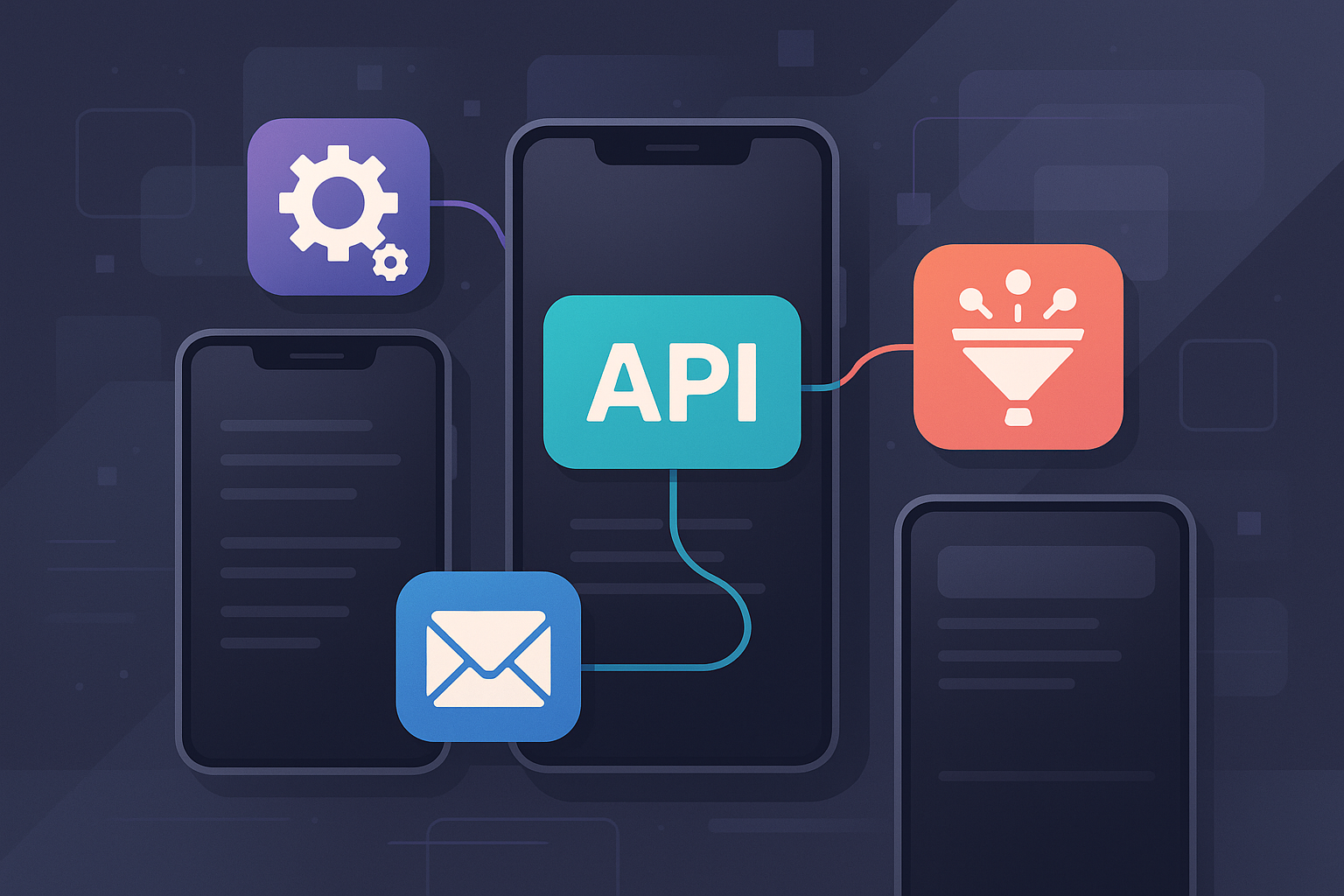
Explore the game-changing automation tools and API integrations re-shaping mobile app development in 2026. Discover which embedded solutions can accelerate lead generation, supercharge your mobile sales funnels, and help digital marketin...
Build direction
Key Takeaways: Automation-Driven Lead Generation for Mobile Apps
Embedding automation tools like AI chatbots, in-app messaging, and form enrichment can vastly improve user conversion rates.
Real-time CRM and marketing automation integrations streamline lead capture and accelerate pipeline velocity within mobile apps.
API-driven analytics and attribution platforms enable precise optimization and compliant data-driven decisions.
Data privacy, consent, and regulatory readiness must be designed into lead generation flows from the outset.
Strategic alignment between marketing, product, and development teams is essential for scalable, future-proof lead generation.
The 2026 Landscape: Why Mobile App Integration Now Defines Lead Generation
The mobile app market in 2026 is more crowded—and more scrutinized—than ever before. Competition isn’t just about features or performance, it’s about delivering quantifiable business impact at every touchpoint. For digital marketing managers and product owners, this means rethinking the app not just as a product, but as an agile marketing platform equipped with integrated lead capture, segmentation, and follow-up engines. Companies that excel at automation-driven lead generation are compressing sales funnels from weeks to real-time, delighting users with responsiveness while capturing the critical data that drives closed deals.
The proliferation of low-code integration platforms and powerful automation APIs is democratizing access to enterprise-level growth tools. Sophisticated in-app workflows—from AI-powered lead qualification to predictive analytics—can be rapidly deployed, unlocking new streams of measurable value. In this environment, the priority shifts from simply building functional apps to orchestrating rich, automated user journeys that maximize every engagement. As explored in our AI Breakouts insight, model security and data integrity are also vital considerations for sustained competitive advantage.
Ultimately, it is the synergy between marketing, product, and engineering that determines success in 2026. This integration of thinking ensures that technical architecture supports dynamic lead flows, while keeping compliance and user trust at the forefront. Without these cross-discipline strategies, even the most impressive front-end features can fall short of commercial objectives.
Must-Have API Integrations for Automated Lead Generation
Selecting the right stack of API integrations is the cornerstone of a successful lead generation ecosystem. Today's leading mobile apps embed several automation-centered APIs, including CRM connectors (Salesforce, HubSpot, Zoho), email and SMS automation (SendGrid, Twilio), AI-enabled chatbots (Dialogflow, GPT-based bots), and advanced analytics platforms (Mixpanel, Segment, Google Analytics 5). The interoperability between these systems allows apps to bridge marketing campaigns, user activity, and downstream sales motions without delay or manual intervention.
AI-driven chatbots have revolutionized first-contact lead capture. Embedded directly within the app, these bots can answer product questions, qualify leads based on intent, and even schedule calls—everything recorded and synced to a central CRM. For verticals with complex sales cycles, mobile app development services now routinely include tailored bot integrations and event tracking right out of the gate. Automated form enrichment APIs complement this by prefilling user details, minimizing friction, and improving conversion.
Another vital integration is real-time lead routing via APIs directly connected to sales and marketing automation platforms. When new leads are identified, advanced logic can segment them and trigger targeted nurture sequences, ensuring no opportunity slips through the cracks. For scaling brands, orchestrating these integrations requires working with experienced product and web development partners who deeply understand both technical and go-to-market imperatives. Learn more about integration competencies on our Web Development and Brand Marketing service pages.
Automation Platforms and Lead Funnel Optimization
In 2026, mobile marketing automation platforms have become the nerve center for real-time lead funnel optimization. Tools like Braze, Iterable, and Marketo are increasingly ‘app-first,’ supporting complex multi-channel campaigns directly from within the app context. Deep-linking and identity resolution APIs close the gap between anonymous app users and actionable marketing personas, facilitating hyper-personalized follow-ups across channels such as push notifications, in-app messages, and even automated retargeting via connected ads.
Integration also enables granular performance measurement. Today’s APIs pass not just lead data, but detailed event streams—button clicks, content views, session data—which unlock advanced analytics and predictive models. This empowers product owners and marketing teams to iteratively refine onboarding flows, automate A/B tests, and optimize ‘aha moments’ for higher conversion. API-driven orchestration eliminates the old silos between acquisition, engagement, and retention, delivering a fully unified view of the customer lifecycle.
Modern CI/CD pipelines make continuous improvement both practical and safe. With API monitoring and rollback capabilities, you can roll out and scale new automation features without risking core app stability. Read our expert guidance on the benefits of CI/CD pipelines for mobile app development for actionable recommendations.
Best Practices: Building Automated, Privacy-Ready Lead Flows
With automation comes heightened scrutiny—especially around data privacy, consent management, and compliance. Users and regulators alike demand transparency at every touchpoint, particularly when their personal information is collected or shared across systems. App product owners must proactively design compliance into their integrations, using built-in consent APIs, data encryption, and centralized privacy controls to ensure global readiness. Our privacy compliance guide for global app users outlines essential steps to mitigate risk and build trust.
Automated lead generation also hinges on maintaining robust user permissions. Embedding granular consent mechanisms not only keeps you on the right side of regulations like GDPR, but it also empowers users to control their own data journey. A/B testing around permissions requests and value messaging can reveal optimal points of conversion without sacrificing legal or ethical obligations. Internal systems should be tightly synced with user choices, instantly honoring opt-outs or data deletion requests across all connected integrations.
Regular privacy assessments and audits keep your technology stack in check. Working with legal, marketing, and tech specialists ensures your automated systems evolve in line with emerging standards. For further detail on compliance workflows, see our resources on GDPR and data privacy laws for apps.
Operationalizing Integration: Product and Marketing Alignment
The most successful mobile lead generation programs are never just a ‘tech project.’ Cross-functional alignment is the catalyst that turns technical integration into marketing performance. Digital marketing managers must partner closely with product and engineering to select, trial, and scale the right automation tools. Early and ongoing collaboration streamlines implementation and prevents the all-too-common disconnect between back-end automation and the user-facing experience.
A best-in-class process starts with clear mapping of the entire lead journey, from first app open to closed deal. By defining handoff points, triggers, and success metrics, teams can select integrations that slot seamlessly into desired user flows. Weekly syncs and shared dashboards keep all stakeholders accountable, while rapid prototyping tools allow for quick iteration on new automation ideas before full rollout.
Feedback loops from sales and customer success enrich the process further, revealing where users drop off and which automations deliver the strongest ROI. In fast-moving categories, integrated analytics provides the agility to capitalize on sudden user behavior changes, adjust scoring criteria, and redirect campaigns—all within a matter of hours. To explore industry-shifting ideas, check out the latest News & Insights on omnichannel marketing and product alignment.
Future-Proofing: Emerging Tools and the Road Ahead for Mobile Lead Gen
Mobile lead generation in 2026 is increasingly shaped by machine learning, generative AI, and composable API architectures. The next wave of integrations includes voice AI assistants, automated qualification scoring powered by neural networks, and universal lead ID standards that unify attribution across app, web, and offline sources. As described in our exploration of new large language models, these advancements enable richer, more contextual user interaction within apps—boosting conversion and lifetime value.
Composable APIs also give brands flexibility to rapidly connect emerging martech entrants and sunset underperforming tools without excessive code refactoring. Architectural flexibility is now a core competitive advantage, reducing both technical debt and risk when pivoting automation strategies in response to new market or compliance requirements. Regular technology audits and vendor reviews are now a fixture of mature mobile growth teams.
Finally, a growing number of mobile apps are shifting toward on-device processing for sensitive automation workflows, leveraging edge AI chips to improve privacy and response latency. These tactical upgrades can future-proof compliance by limiting data transfer and reducing exposure to privacy breaches. For deeper context on the hardware revolution driving this change, visit our piece on AI chip trends.
Decision table
Comparison Table: Top Automation Integrations for Lead Generation in Mobile Apps
| Tool/API | Core Function | Integration Level | Best Use Case |
|---|---|---|---|
| Dialogflow Chatbot | AI Conversational Lead Capture | Native SDK & REST API | Automated Q&A, Lead Qualification |
| HubSpot CRM | Real-Time CRM Sync | RESTful API | Seamless Lead Routing, Sales Notification |
| Braze | In-App Messaging & Journey Automation | SDK & Webhooks | Personalized Nurture Flows |
| Segment Analytics | CDP & Attribution | JavaScript/SDK/Cloud | Unified Data Streams for Optimization |
| Twilio | Automated SMS/Voice Outreach | REST API | Immediate Lead Follow-Up, Multi-Channel |
Article FAQ
Questions related to this article.
What should I consider when choosing lead generation APIs for my mobile app?
Focus on compatibility with your existing tech stack, scalability for future growth, built-in data privacy features, and the depth of documentation and community support. Look for APIs that offer robust event tracking, user segmentation, and regulatory compliance tools. Always involve your marketing, product, and development teams in the selection process to ensure the APIs can serve cross-functional needs.
How can I ensure my automated lead flows comply with global privacy laws?
Implement granular, opt-in consent mechanisms and use APIs that provide built-in audit trails and dynamic permission management. Maintain rigorous data encryption and invest in regular compliance audits with guidance from legal, tech, and marketing experts. For specific action plans, see our resource: Ensuring Mobile App GDPR Compliance.
What are the advantages of integrating CRM platforms with mobile apps for lead generation?
CRM integrations facilitate seamless syncing of lead data, automated pipeline updates, and instant sales notifications. By closing the loop between your app and sales teams, you speed up follow-ups, personalize outreach, and dramatically reduce manual data entry or lost leads. Review our App Development services for custom CRM integration solutions.
Are AI-powered chatbots suitable for all industries’ lead funnels?
AI-powered chatbots are effective across most industries, particularly for high-volume, B2C, and info-heavy customer journeys. However, their configuration should be tailored to your audience’s technical literacy and the complexity of your product. Consider hybrid approaches with clear escalation to human agents for niche, regulated, or high-stakes verticals.
How do I measure the real-world ROI of automated integrations in lead generation?
Align measurement with performance metrics such as conversion rate uplift, reduced lead response time, sales velocity, and customer lifetime value. Use end-to-end analytics to link automation triggers to actual revenue outcomes. Automated attribution via CDP tools like Segment and Braze enables granular tracking across the entire funnel.