As mobile platforms solidify their dominance in digital ecosystems, staying ahead in app development means more than simply shipping features quickly—it’s about delivering smarter, faster, and with greater relevance to users. AI-powered automation is rapidly reshaping how digital marketing managers and app development leads approach the entire mobile app lifecycle, from product ideation to lead generation and brand engagement. In 2026, integrating advanced AI-driven automation isn’t just a competitive advantage; it’s the foundation for rapid user acquisition, enhanced personalization, and sustainable growth. This article unpacks how automation tools, intelligent data flows, and AI-enhanced marketing not only accelerate time to market, but also supercharge campaign ROI and user retention. Discover how your development and marketing teams can leverage these cutting-edge techniques to transform app launches and fuel your brand’s momentum.
Articles
Mobile App Development in 2026: Leveraging AI-Powered Automation for Rapid User Acquisition
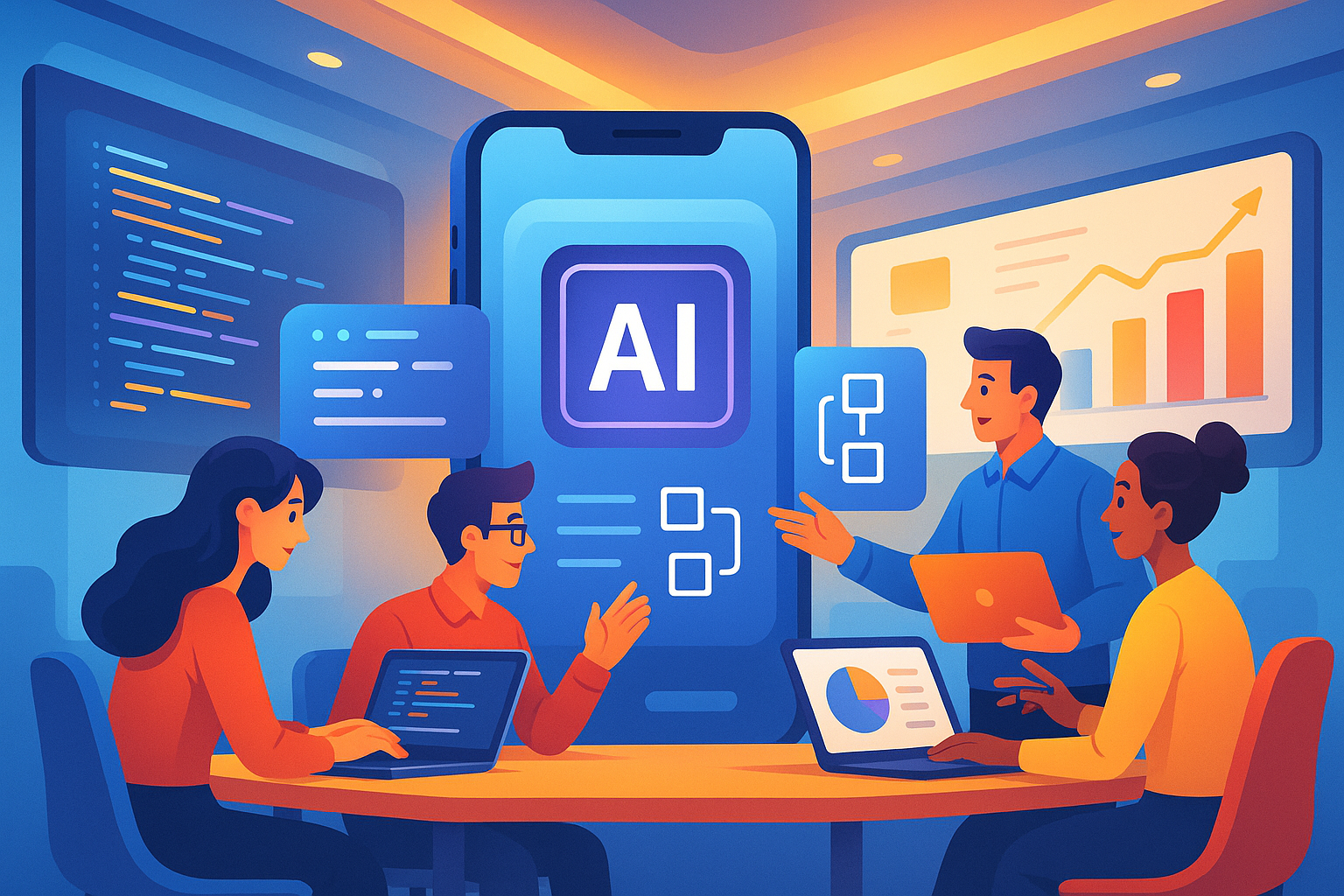
Explore how AI-driven automation is transforming mobile app development in 2026. Learn how accelerated build cycles and personalized user acquisition strategies can put your app ahead of the competition and fuel marketing growth.
Build direction
Key Takeaways: AI Automation in Mobile App Development
AI-powered automation streamlines development cycles, reducing time to market by more than 40% on average.
Automated personalization—driven by real-time data—dramatically increases user acquisition and engagement metrics.
AI-driven marketing enables precise segmentation, lead scoring, and campaign optimization, delivering higher ROI.
Integrating automation in the app stack simplifies compliance, supports A/B testing, and scales retention strategies.
Cross-functional teams adopting these tools enjoy faster iteration between concept, launch, and post-launch optimization.
AI Automation: The New Backbone of Mobile App Development in 2026
The mobile app ecosystem in 2026 has evolved beyond manual workflows and siloed teams. With users demanding seamless, tailored experiences and time-to-market pressures at an all-time high, traditional development timelines are no longer feasible. Modern app strategies are now defined by sophisticated automation tools powered by artificial intelligence, fundamentally shifting how core processes are approached. From concept to deployment, AI is shortening sprints, automating the repetitive, and surfacing actionable insights in real time—enabling development leads and marketing managers to move faster and more intelligently.
AI-driven development environments now handle code generation, bug detection, UI prototyping, and even predictive user flow modeling. Tools such as context-aware code assistants, no-code UI builders, and smart test suites massively reduce cycle time and operational overhead. Teams leveraging these platforms can focus on high-impact, creative problem-solving, while routine tasks are seamlessly automated. For a deeper dive on utilizing prototyping tools specifically, see How can I use prototyping tools in mobile app design?.
Ultimately, AI automation doesn’t just make development faster—it enables a data-driven feedback loop with marketing and product design. The result: products that not only go to market quicker but are also better aligned with user needs and engagement drivers.
Rapid User Acquisition: How AI-Powered Tools Transform Growth Strategies
In today’s crowded marketplaces, rapid and sustainable user acquisition is a decisive factor for app success. AI-powered automation brings profound enhancements to how brands identify, attract, and convert high-value users. Through predictive analytics and real-time data aggregation, marketing teams can now target audience segments with unprecedented precision, optimizing campaigns before launch based on expected behavioral outcomes.
Automated dynamic creatives and personalized onboarding workflows—driven by user data and engagement triggers—drive higher activation rates, ensuring that every acquisition dollar yields maximum retention. Tools that incorporate machine learning adapt campaigns in real time, reallocating budgets and creatives to the highest-performing channels, whether through paid acquisition, influencer outreach, or organic in-app referrals.
The integration with AI Digital Marketing platforms (see more at AI Digital Marketing service) enables advanced lead scoring, ROI tracking, and automated performance optimization. For specialists aiming to supercharge user influx during app launches, leveraging these AI-centric methods is no longer optional—it’s essential.
AI Automation in Marketing: Personalization, Lead Scoring, and Retention
Personalization sits at the intersection of user experience and conversion rates—and AI has elevated its potential dramatically in mobile marketing. By harnessing AI-driven automation, marketing teams can automatically segment users, generate individualized content, and trigger communications at the exact right moments. Consider, for example, how a grocery delivery app can deploy personalized push notification campaigns using real-time shopping data.
Lead scoring, traditionally a painstaking manual task, is now fully automated through machine learning models embedded in leading marketing platforms. These systems continuously learn from campaign outcomes and user interactions, so every lead is qualified and prioritized based on genuine behavior and intent. For actionable guidance on setting up such systems, refer to Can a digital marketing agency help set up AI-powered lead scoring systems?.
As retention becomes critical to long-term app success, AI-enabled automation orchestrates A/B testing, churn prediction, and re-engagement flows at scale. Teams can direct marketing resources precisely where they’ll have the highest impact, ensuring not just acquisition, but strong user loyalty.
Product, Web, and Operational Decisions Powering AI-Led Mobile Growth
Successful use of AI-powered automation hinges on making interconnected decisions across product development, web integrations, and operational infrastructure. Product leads must select app frameworks that natively support AI toolchains while enabling rapid experimentation. Top mobile app frameworks for building service marketplaces now feature built-in automation layers and seamless AI interoperability—critical for both MVP development and robust scaling.
On the web and server side, automation pipelines unify data from diverse sources, enhancing campaign measurement and feedback loops. Integrating with web development solutions—such as those highlighted in our Web Development service—ensures frictionless handoff between user-facing touchpoints and backend AI analytics. Operationally, cloud-native workflow automation and containerization further accelerate deployments and facilitate continuous integration/continuous delivery (CI/CD) driven by AI insights.
Brand managers must address compliance and data privacy at every stage. Automated user consent flows and global regulatory alignment are increasingly managed by AI routines embedded in the development process. For a comprehensive look at compliance needs, consult How do I manage data privacy compliance for global app users?.
Challenges, Myths, and the Real ROI of Automated Mobile App Workflows
Despite the growing evidence, some teams still view AI automation as costly or disruptive, fearing a loss of control or creativity. In reality, the latest platforms are designed for integration and oversight, enabling humans to set strategy while AI handles execution and optimization. The myth that automation eliminates jobs has also been thoroughly debunked. Instead, as seen in recent studies reported by AI and the Job Apocalypse That Wasn’t: A Changing Employment Landscape, automation augments team capacity and effectiveness.
Another challenge is the perceived difficulty of unifying AI tools across marketing, product, and operational systems. Forward-thinking teams break down these barriers through modular platforms and strong API integrations. The ROI of this approach is evidenced by cycle times reduced from months to weeks and user retention rates surpassing industry benchmarks.
Finally, with the digital landscape in constant flux, compliance and legal questions demand attention. AI systems must be transparent, auditable, and designed for responsible data stewardship. To understand recent legal developments impacting digital businesses, see AI Agents and Legal Liability: What Every Digital Business Needs to Know in 2026.
Future Trends and Next Steps: Strategic Recommendations for 2026 and Beyond
Looking forward, the interplay between generative AI, edge computing, and automation will further transform mobile app strategies. In-app AI agents are set to reshape everything from user support to predictive analytics, while hyper-personalized omnichannel campaigns become the norm. App development leads and marketers must prioritize flexible architectures and continuous upskilling to keep pace with this unfolding landscape.
Stakeholders should align on a unified AI roadmap that encompasses rapid experimentation, multidimensional data integration, and automated privacy solutions. Partnerships with experienced AI brand marketing agencies—such as those discussed in our AI Brand Marketing service—will be vital for brands aiming to scale both reach and reputation.
Finally, knowledge sharing and ongoing education are more important than ever. Stay updated via our News & Insights hub, explore targeted help articles in the Help hub, and monitor new product innovations at the Products hub to ensure your teams remain at the forefront of mobile app development innovation.
Decision table
AI-Driven Mobile App Development: Planning and Comparison Table
| Development Area | Traditional Workflow | AI-Automated Workflow | Key Impact |
|---|---|---|---|
| Design and Prototyping | Manual wireframes, static user journeys | AI-powered rapid prototyping, predictive flows | Faster iteration, higher UX alignment |
| User Acquisition | Segmented campaigns, basic analytics | Real-time segmentation, dynamic campaign AI | Improved targeting, higher user growth |
| QA & Testing | Manual scripts, basic bug triage | Automated test suites, smart bug detection | Shorter release cycles, fewer defects |
| Personalization | Generic offers, limited targeting | Granular personalization, adaptive content | Boosted engagement, conversion |
| Compliance | Manual review, spreadsheet tracking | Automated consent flows, AI compliance checks | Reduced legal risk, global scalability |
Article FAQ
Questions related to this article.
How does AI automation reduce the time to market for mobile apps?
AI automation transforms traditionally manual tasks—such as code generation, bug detection, and user testing—into continuous, proactive processes. By automating these and integrating AI across development pipelines, teams can transition from concept to launch in a fraction of the time. Automated prototyping and predictive analytics identify user needs earlier, while dynamic test suites ensure faster, higher-quality releases. For more technical details, explore App Development service.
Can automated AI tools personalize mobile user experiences at scale?
Absolutely. AI-powered automation enables real-time processing and segmentation of user data, making it possible to deliver personalized in-app messaging, content, and push notifications at any scale. Machine learning models continually adapt to evolving user behaviors, ensuring that each user receives the most relevant experience possible. See examples in How can a grocery app offer personalized push notification campaigns?.
How does AI assist with compliance and data privacy for global app audiences?
AI automation can manage user consent flows, monitor global regulatory changes, and adapt app features to comply with local data privacy laws in real time. Integrated compliance checks catch risks before deployment, and automated reporting simplifies audits. For more guidance, read How do I manage data privacy compliance for global app users?.
What should digital marketing managers consider when adopting AI-driven marketing automation?
Managers must ensure their chosen platforms are interoperable across both development and marketing ecosystems, supporting robust data flows and actionable insights. It’s essential to invest in machine learning models able to adapt campaigns, score leads, and optimize retention automatically. For strategic advice, consult AI Digital Marketing service and related help resources.
Where can I find ongoing insights and case studies on AI in mobile app development?
For the latest thought leadership, real-world case studies, and expert commentary on AI’s impact in mobile, visit our News & Insights hub. You’ll find everything from industry trend analysis to innovation spotlights, including articles like AI-Powered Conservation.